In 1971, Bangladesh gained independence from Pakistan after a violent conflict. What is not known widely is how a team of doctors from Calcutta fought off an epidemic in the midst of this savage war, popularising something we often drink today.

Given the severe summer heat that has engulfed many parts of India, doctors often prescribe drinking more fluids and keeping ourselves hydrated with something called an Oral Rehydration Solution or ORS.
The solution gained popularity after it was extensively used in the Bangladesh war. The story takes us to Calcutta when the news of an all-out war between India and Pakistan over East Pakistan was spreading like wildfire.
Bengal experienced a massive influx of refugees fleeing the oppressive regime of East Pakistan. However, their struggles were far from over as the refugee camps established around the border were plagued by the deadly disease of cholera.
With a fatality rate of almost 30%, government organizations were finding it hard to control. It was then that the Johns Hopkins University International Centre for Medical Research in Calcutta decided to send a team to help out.
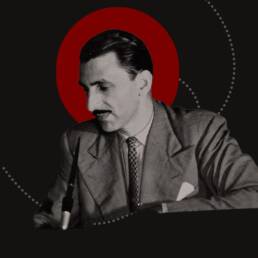
Dilip Mahalanabis, a pediatrician who had studied and worked in the UK, led the team. He was pioneering oral rehydration therapy (ORT) at the time. Before ORT, intravenous fluid therapy was the primary treatment for diarrheal dehydration.
A group of physiologists observed that glucose enhances the absorption of sodium and water across the intestinal brush-border membrane of experimental animals. This would eventually become the basis of developing ORT further.
The notion was further made concrete when in 1961 a cholera pandemic broke out in Taiwan. Dr Robert Philps of the US Army successfully tried out the oral glucose saline on cholera patients, keeping the disease in check.
While the results were promising, Phillips and his team couldn’t make further strides as their therapy was found flawed in some scenarios and some patients died as a result of it. However, his therapy would find takers in Chittagong in East Pakistan 1968.
Dr Richard Cash and David Nalin wrote an oral rehydration therapy protocol to be carried out in the field, in Matlab Bazaar, based on Philip’s earlier study. Their study confirmed that some cholera patients could be rehydrated with oral rehydration therapy alone.
Three years later, somewhere near Bongaon (India-Bangladesh border) Mahalanabis and his team were facing dire conditions. Around 350,000 refugees were living in the vicinity of the town and the medical centers were ill-equipped to cater to them all.
Makeshift tents were created as Mahalanabis and his team went to work. Given the findings from the Matlab experiment and his own knowledge, Mahalanabis concluded that oral rehydration alone would be enough to prevent fatal dehydration in the early stages.
Mahalanabis made the solution using locally available ingredients and with a minimum number of ingredients consisting of 22g glucose, 3.5g sodium chloride, and 2.5g sodium hydrogen carbonate per liter of water.
This powdered mixture was added to large containers of potable water and given to patients in cups; it could be administered even by family members.
Due to local sourcing, the cost was kept low at just 11 paise (1.5 cents) per liter of the solution. During an 8-week period in which Mahalanabis and his team administered this therapy to 3700 patients, only 135 cases among them were fatal.
The fatality rate dropped down from 30% to 3.6%. During this time, Dr. Dhiman Barua who was the head of the bacterial diseases unit of the WHO, visited the camp managed by Mahalanabis and began boldly promoting the treatment in the WHO and UNICEF.
While the efficacy of the ORT was proven, to a large extent people were still skeptical about Mahalanabis’s findings. Further experiments were done in Manipur in 1978 during a cholera outbreak which promoted the efficacy of ORT beyond any reasonable doubt.
In the same year WHO launched the global diarrheal diseases control program with ORS at its heart. Mahalanabis, who never patented his ORS formula, later served in various capacities within WHO and its cholera units worldwide, saving numerous lives.
He was posthumously awarded the Padma Vibhushan in 2023 for his pioneering contribution to the widespread adoption of Oral Rehydration Solution (ORS).
Sources:
MAGIC BULLET: THE HISTORY OF ORAL REHYDRATION THERAPY by JOSHUA NALIBOW RUXIN, rehydrate.org/ors/pdf/histor